

By: Ava Meiner
Marketing & Communications Manager
Have you ever spent time writing the perfect story for your newsletter, only to move on to the next piece of content a few days later? Many nonprofit communicators feel like they’re constantly searching for something new to share. But the best stories often aren’t new at all. They’re the ones you’ve already collected.
The key isn’t finding more stories. It’s learning how to tell the same story in different ways for different audiences.
It Starts with a Single Story
Meet Maya.
Maya is a single mom raising her eight-year-old son, Lucas. When unexpected financial challenges made it difficult to keep food on the table, she and Lucas turned to her local food pantry for support.
As they moved through the pantry aisles, Lucas pointed out apples, cereal, and peanut butter, asking if they could bring them home. In the produce section, he carefully set a bunch of bananas in the cart.
At checkout, a volunteer invited him to add a sticker to the pantry’s community wall, where every family leaves a sticker before they go. Lucas pressed his sticker onto the wall, stepped back to admire it, and turned to his mom.
“Can we come back and help when we don’t need food anymore?”
She smiled. “I hope so.”
A year later, Maya and Lucas walked back through the food pantry doors. This time, they wore volunteer name tags and stocked shelves before the pantry opened for the day.
That’s one story. Here’s six ways it can be told.
1. Website
Your website is where the full story lives.
This is where visitors get to know Maya and Lucas. Share more about the challenges they were facing and how your organization walked alongside them. Include photos and quotes from Maya and Lucas so readers can hear the story in their own words.
Then, bring the story full circle. Show where they are today and why they chose to return as volunteers. Stories like these remind people that your organization’s impact doesn’t end when someone walks out the door with groceries. Sometimes, it inspires them to come back and help someone else.
A story like this could live in a Stories of Impact, Testimonials, or Our Impact section of your website, giving visitors a place to connect with the people behind your mission.
Pro Tip: If Maya and Lucas are comfortable sharing their story on camera, consider recording a short two-minute interview. Feature the full video on your website, then repurpose shorter clips for social media, donor communications, or volunteer recruitment.
2. Newsletter
Your newsletter doesn’t need to tell the whole story. Instead, think of it as an invitation to learn more.
Share a photo of Maya and Lucas, introduce them with a few sentences, and include a quote that captures the heart of their experience. Give readers just enough to spark their curiosity, then invite them to visit your website to read the full story.
For Example:
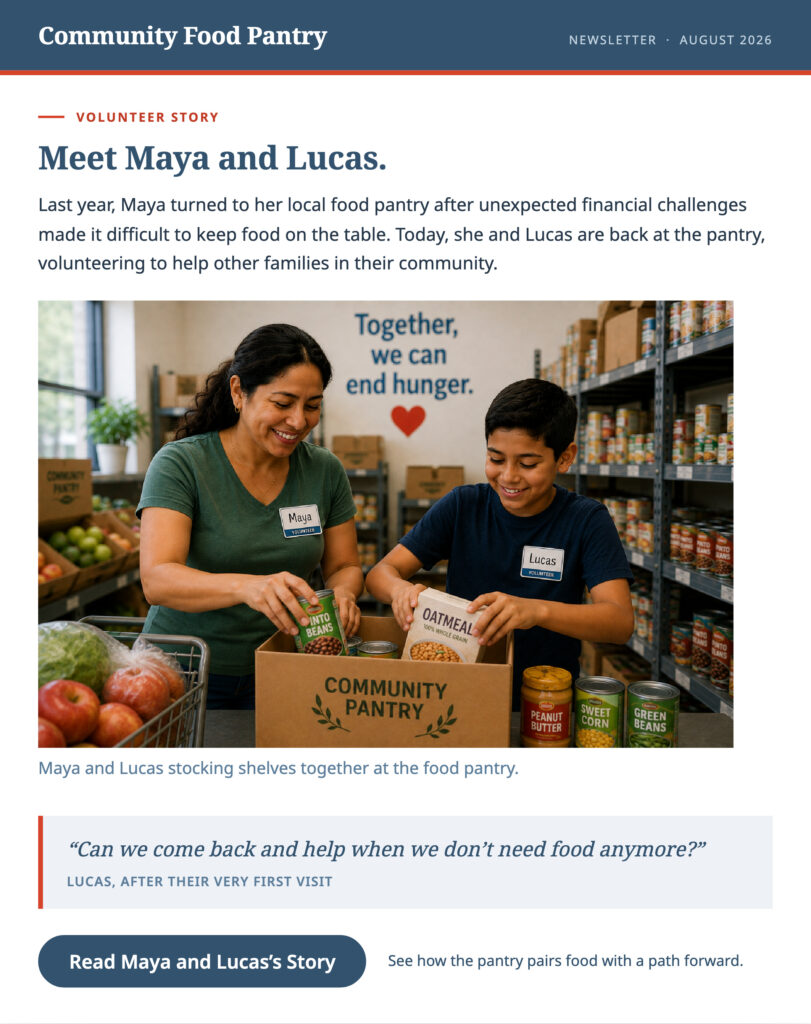
Pro Tip: Save part of the story for your website. Sharing just enough to draw the reader in encourages them to click through, while giving each communication channel its own purpose in telling the larger story.
3. Social Media
Social media gives you the opportunity to tell the story visually.
Instead of sharing the entire story in one post, focus on one meaningful moment at a time. A photo, a quote, or a short video clip can each highlight a different part of Maya and Lucas’s journey while encouraging your audience to learn more.
For Example:
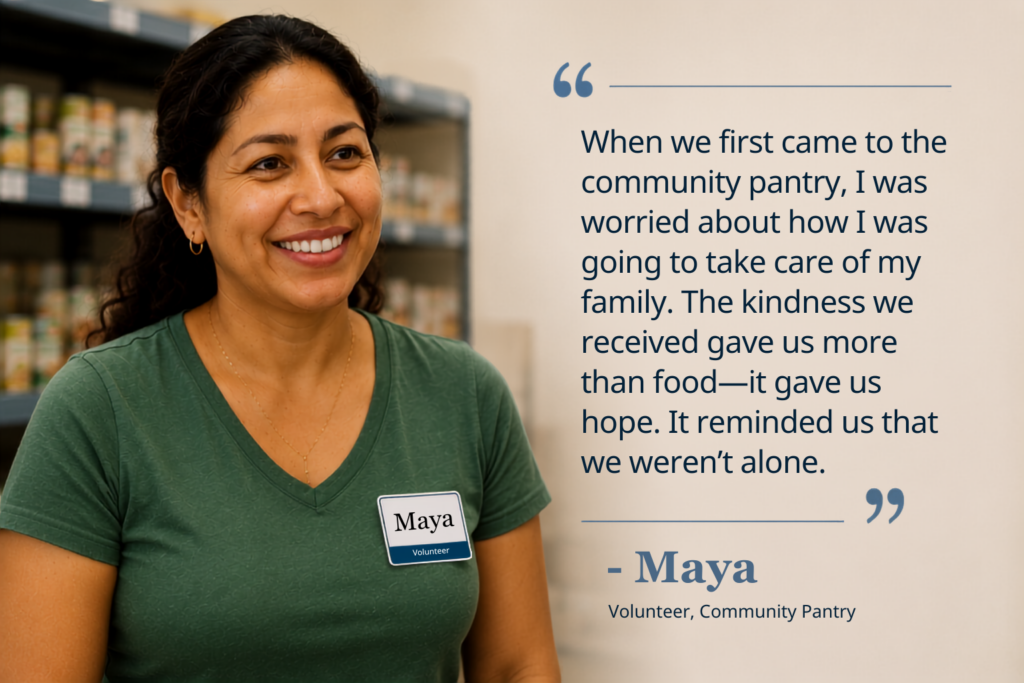
Each post highlights a different part of the story, giving your audience another opportunity to connect with your mission.
Pro Tip: Don’t feel like you have to share every photo or quote at once. Spacing content out over several weeks helps extend the life of one story while giving your audience a reason to keep following along.
4. Donor Appeal
A donor appeal is another opportunity to share Maya and Lucas’s story, but this time, the goal is to inspire action.
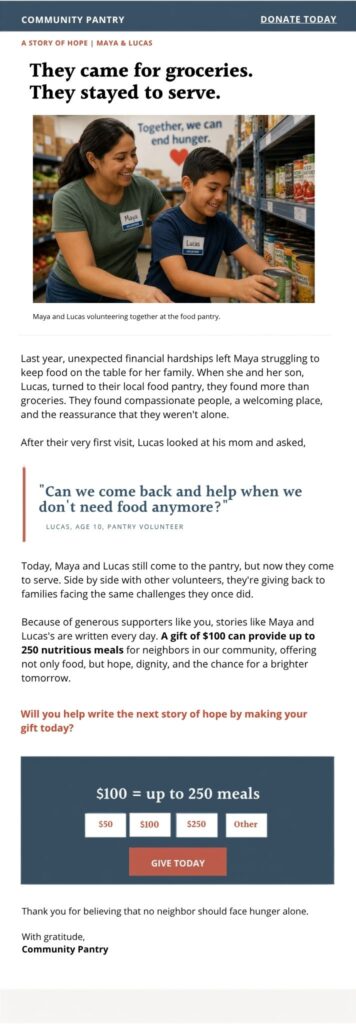
Unlike your website, where readers can explore the full story, a donor appeal should share an abbreviated version that captures the heart of their experience. Pair it with a meaningful photo and a quote that helps donors connect with the people behind your mission.
As you tell the story, focus on hope rather than hardship. Share what brought Maya and Lucas to the pantry, but spend even more time showing how your organization made a difference in their lives. Then, remind readers that their story represents many of the families your organization serves each year.
Finally, invite donors to become part of someone else’s story. Help them understand exactly how their gift will make a difference and end with a clear invitation to give.
For Example:
5. Impact or Annual Report
An impact report is where your story and your data come together.
Start by sharing Maya and Lucas’s story, then show readers that their experience is just one of many. Pair their story with a few meaningful statistics that illustrate the broader impact your organization is making across the community.
For Example:
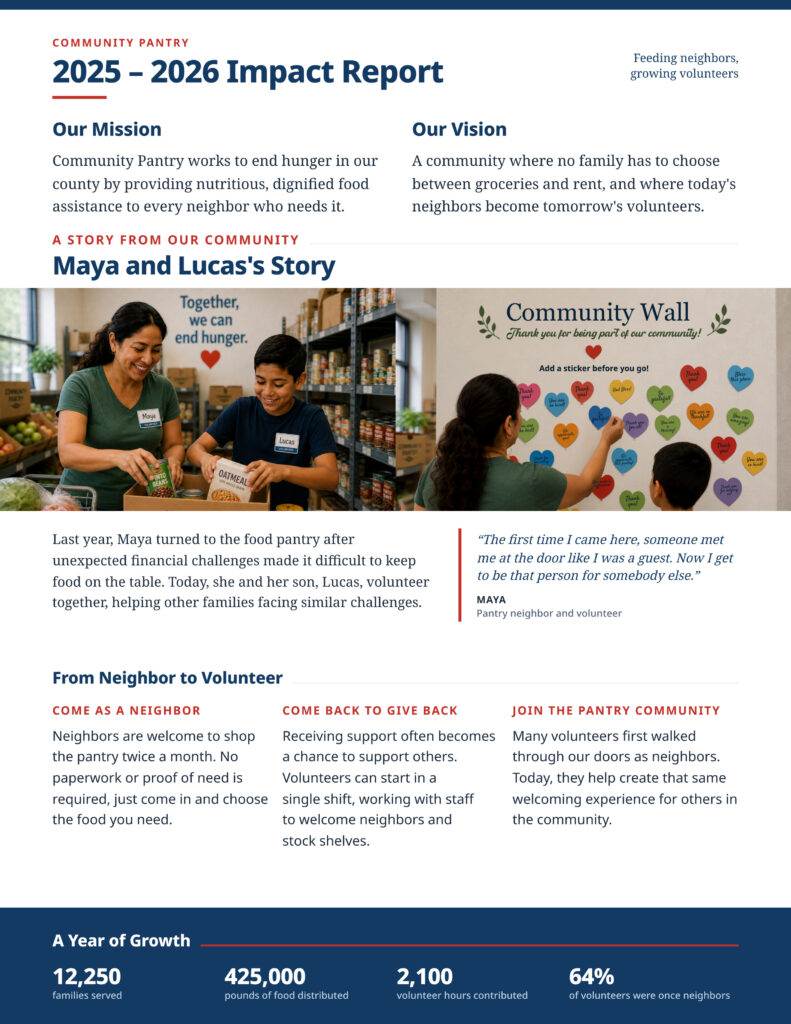
Maya and Lucas’s story helps readers connect with one family’s experience. The data reminds them that there are hundreds of families with stories just like theirs.
6. Volunteer Recruitment
Volunteer recruitment gives you the opportunity to tell the story from a different perspective.
Instead of focusing on Maya and Lucas, tell the story through the eyes of the volunteer who witnessed their journey. Share the moment they watched Lucas place his sticker on the community wall and ask a question that stayed with them long after the family’s visit ended.
Stories like these help people understand what volunteering is really like. They give potential volunteers a glimpse into the moments they’ll experience and the difference they can make simply by showing up.
For Example:
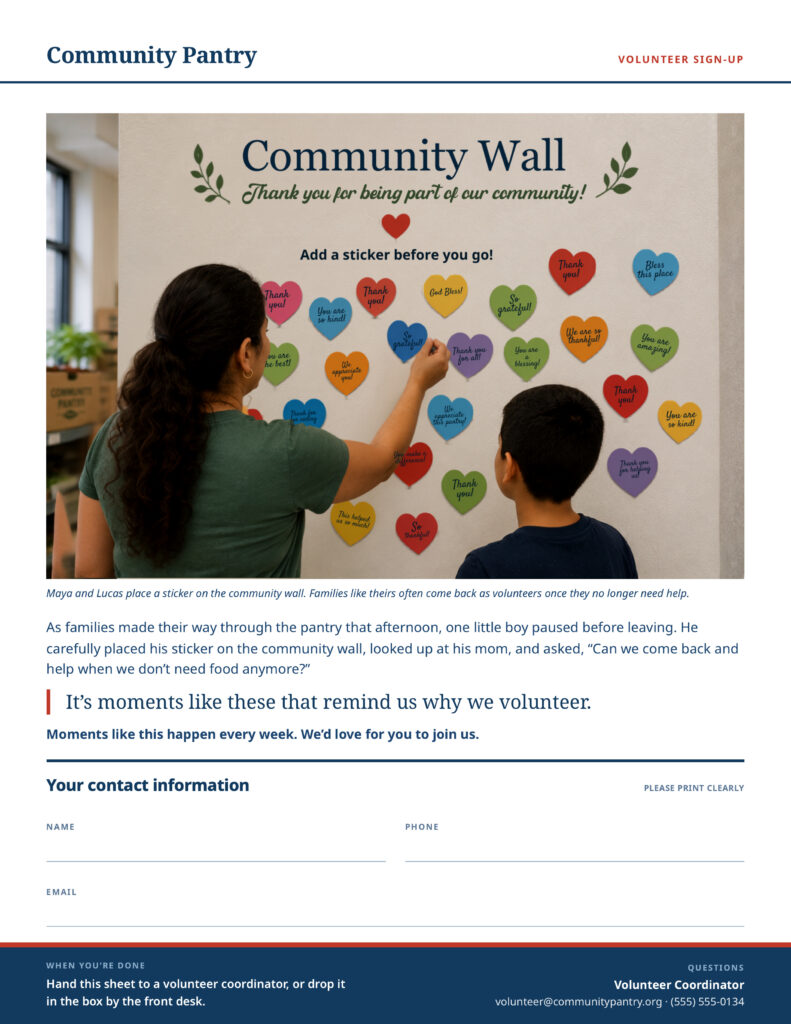
Pro Tip: The best volunteer stories help people picture themselves making a difference. Focus on the moments that show the impact volunteers have, not just the tasks they complete.
One Story, Six Pieces of Content
| Original Story | Repurposed Into |
|---|---|
| Full impact story with quote and photo | Website Article |
| Photo, quote, and teaser of story | Email Newsletter |
| Photos, short video clips, and quotes | Social Media |
| Abbreviated story tied to donor impact | Donor Appeal |
| Story and statistics | Impact or Annual Report |
| Volunteer perspective | Volunteer Recruitment Campaign |
Start Looking at Your Stories Differently
The next time your organization celebrates a milestone, welcomes a new volunteer, or hears a quote that captures your mission, don’t stop at asking, “What should we post?”
Instead, ask, “Where else could this story make an impact?”
The same story can educate visitors on your website, inspire a donor to give, encourage someone to volunteer, or remind your community why your mission matters.
You don’t need more stories, you need to see the ones you already have in a new light.